
A great manicure does not end when you leave the chair. The right aftercare routine is what separates a set that looks salon fresh for weeks from one that starts showing wear within days. This guide from Capelier's Nail Salon JBR team covers the simple daily habits that protect your investment, especially in Dubai Marina's warm, humid climate.
Key Takeaways
- Waiting before water exposure and moisturising cuticles daily are the two habits that matter most.
- Gloves and SPF hand cream protect your manicure from Dubai's cleaning routines and sun exposure.
- A consistent two to three week touch up schedule keeps nails looking consistently polished.
Whether you left the salon with a soft neutral set or a bold seasonal design, the same core aftercare principles apply. What changes slightly between styles is how quickly wear becomes visible, since darker or more textured finishes tend to show chips sooner than sheer or neutral tones. Understanding this helps set realistic expectations for how a particular style will look partway through its cycle, rather than being surprised by normal wear on a bold colour.
The First Few Hours Matter Most
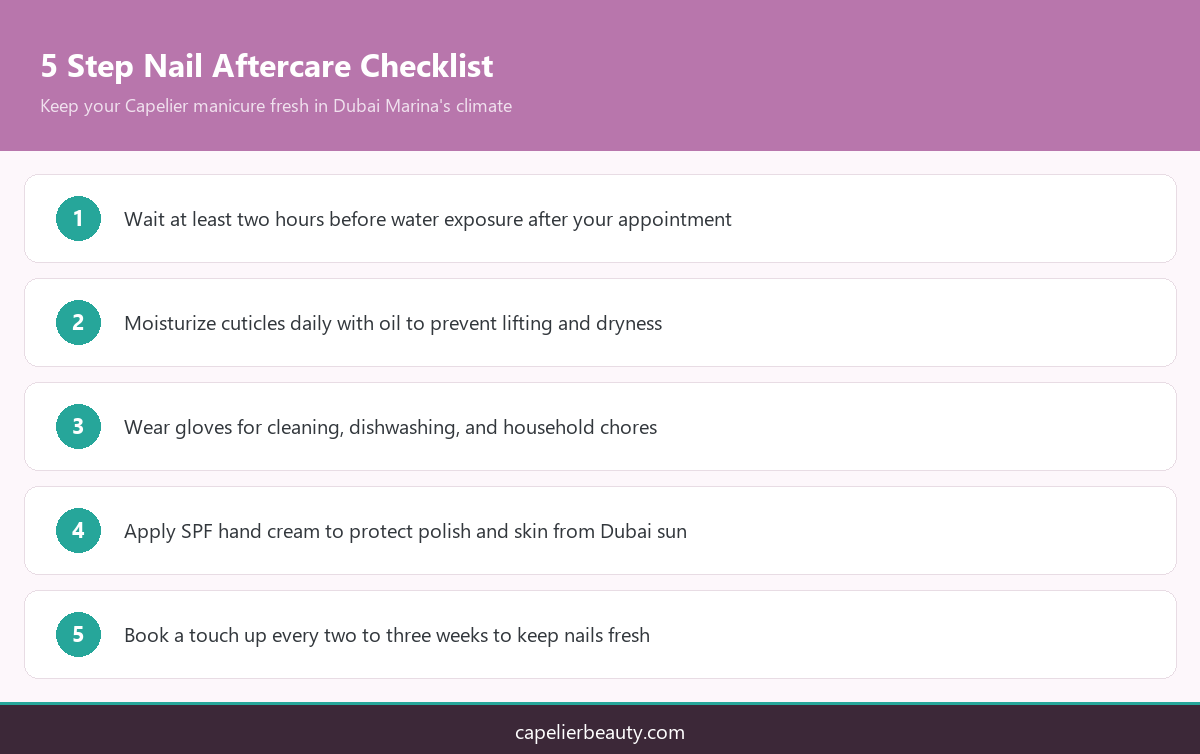
The period right after your appointment is when nails are most vulnerable. Gel polish cures fully under the salon lamp, but the surrounding cuticle skin and any freshly buffed nail surface benefit from a short settling period before heavy water exposure. Waiting at least two hours before washing dishes, taking a long shower, or swimming gives everything time to fully set, reducing the chance of early lifting at the edges.
This window is also a good time to avoid tight gloves, rough fabrics, or activities that put direct pressure on the nail tip, such as unpacking boxes or gardening. Small precautions in the first few hours pay off over the following weeks, particularly for clients who plan to keep their set through busy work or travel schedules.
Sleeping habits play a role too. Clients who tend to sleep with their hands tucked under a pillow or curled tightly overnight sometimes notice more pressure related chipping on the nail tips than those who sleep with hands more relaxed. This is a minor factor compared to water exposure and daily friction, but it is worth being aware of if you notice consistent chipping in the same spot after every appointment.
Daily Habits That Protect Your Manicure
Cuticle oil is the single most effective daily habit for extending manicure life. Applying a small amount each morning and evening keeps the skin around the nail flexible, which helps prevent the small cracks and dryness that often give gel or polish an entry point to start lifting. The American Academy of Dermatology recommends regular moisturising as part of general nail health, and this applies just as much to polished nails as bare ones.
Gloves are the second habit worth building into your routine. Dishwashing, using household cleaning products, and gardening all expose nails to detergents and abrasion that wear down polish faster than everyday use alone. Keeping a pair of light gloves near the sink makes this an easy habit to maintain without changing how you approach household tasks.
A good hand cream matters as much as the oil itself. Choosing a formula with light hydrating ingredients rather than a heavy, greasy texture means you can apply it more often throughout the day without it interfering with grip or leaving residue on phones, keyboards, or fabric. Keeping a travel sized version in a bag or car makes it easier to reapply after handwashing, which in a busy day can add up to several applications without feeling like an extra task.
Protecting Your Manicure From Dubai's Sun and Heat
Dubai Marina's sunny climate means hands are exposed to UV rays far more often than in cooler regions, and that exposure affects both skin and polish. SPF hand cream, applied the same way you would apply sunscreen to your face, helps prevent the fading and dulling that direct sun exposure can cause over a two to three week manicure cycle. It also protects the skin around your nails from the same premature ageing sun exposure causes elsewhere.
Pool and beach days call for a little extra attention. Rinsing hands with fresh water after swimming and reapplying hand cream afterward helps offset the drying effect of chlorine and salt water, both of which can leave cuticles brittle if left untreated. Clients who spend regular time by the water often find that this one extra step noticeably extends how fresh their set looks by the end of the cycle.
Air conditioning indoors and heat outdoors create a similar drying effect to sun exposure, even without direct UV contact. Clients who spend most of their day moving between air conditioned offices, cars, and malls often benefit from the same hydration routine as those who spend time outdoors, since dry indoor air can pull moisture from cuticles just as effectively as heat does.
Building a Touch Up Routine That Works
Rather than waiting for visible regrowth or lifting, booking a touch up every two to three weeks keeps nails consistently polished and gives your technician the chance to catch small issues early. This is especially useful for clients who compared gel extensions and acrylics and chose a longer wearing option, since even durable enhancements benefit from a regular check rather than being left until they visibly need attention.
A fixed schedule also makes it easier to plan around events. Clients who know they have a touch up booked every third Friday, for example, rarely find themselves needing a rushed appointment before a wedding or work trip, since their set is already on a maintenance rhythm rather than being addressed reactively.
Travel adds another layer worth planning for. Long car journeys with air conditioning running directly on your hands, or flights where cabin air is especially dry, both accelerate the same dehydration effect. Packing a small bottle of cuticle oil or hand cream in carry on luggage is a simple way to keep a manicure looking fresh even after a long travel day around the region or beyond.
What to Avoid Between Appointments
A few common habits undo good aftercare quickly. Using nails as tools, such as opening cans or scraping labels, is one of the fastest ways to chip polish or crack a nail tip. Picking at lifting polish rather than having it professionally addressed can also damage the natural nail underneath, turning a small cosmetic issue into a longer repair. If you notice early lifting, a quick visit for a fix is almost always better than waiting or attempting a home repair.
It is also worth avoiding harsh acetone based products for everyday cleaning tasks, since repeated exposure can dry out both the polish and the surrounding skin faster than expected. Keeping a simple, consistent routine, rather than an occasional intensive fix, tends to produce the best long term results for manicure longevity.
Small, consistent habits will always outperform an occasional intensive fix. A minute of cuticle oil each morning, gloves for the tasks that need them, and SPF hand cream during sunny days add up to a manicure that genuinely lasts its full cycle, rather than one that starts looking tired halfway through. None of these steps require extra products beyond what most people already own, they simply need to become part of a daily routine rather than an afterthought.
Keep Your Manicure Looking Fresh at Capelier
Good aftercare is what makes the difference between a manicure that fades quickly and one that still looks freshly done weeks later. Browse Capelier's gallery for style inspiration, then book your next manicure at the JBR salon and let the team help you build an aftercare routine suited to your lifestyle.
Frequently Asked Questions
How soon after a manicure can I get my hands wet?
Waiting at least two hours before extended water exposure, such as dishwashing or swimming, gives the polish and surrounding cuticle time to fully settle after your appointment.
How often should I apply cuticle oil?
Twice a day, once in the morning and once before bed, is enough to keep cuticles flexible and reduce the small cracks that often lead to early lifting.
Do I need SPF on my hands if I already wear it on my face?
Yes, facial SPF rarely covers the hands. A separate SPF hand cream protects both the skin and your manicure from Dubai's strong sun exposure.
What should I do if my polish starts lifting early?
Book a quick fix appointment rather than picking at it yourself. Picking can damage the natural nail, while a professional fix addresses only the lifted area.
Can household cleaning products damage a fresh manicure?
Yes, detergents and cleaning chemicals wear down polish faster than everyday use. Wearing gloves during cleaning tasks is a simple way to prevent this.
Is it bad to use my nails as tools?
Using nails to open cans, scrape labels, or pry objects open is one of the most common causes of chips and cracks, regardless of how well the manicure was applied.
How does swimming affect a fresh manicure?
Chlorine and salt water can dry out cuticles and soften the polish bond. Rinsing with fresh water and moisturising afterward helps offset this effect.
How often should I book a touch up appointment?
Every two to three weeks is typical for most clients, keeping nails consistently polished rather than waiting for visible regrowth or wear.
Does nail health matter as much as the polish itself?
Yes, healthy, well moisturised nails hold polish better and longer. Reviewing Capelier's nail care services with your technician helps address any underlying nail health concerns.
What is the biggest mistake people make with manicure aftercare?
Skipping cuticle oil is the most common mistake. It takes only seconds daily but has the single biggest impact on how long a manicure stays looking fresh.